There is a lie we often hear in the business world: "If it works, don't touch it."
Let us tell you the truth as a software company: If your system "just works" but cannot scale, cannot be updated, and crashes with every new feature; that system is not actually working, it is slowly killing you. We call this "Technical Debt" in the software world, and the interest rates are much higher than those of banks.
Today, as Programevi, we are putting the toughest topic on the table: Legacy Modernization.
What is a Legacy System?
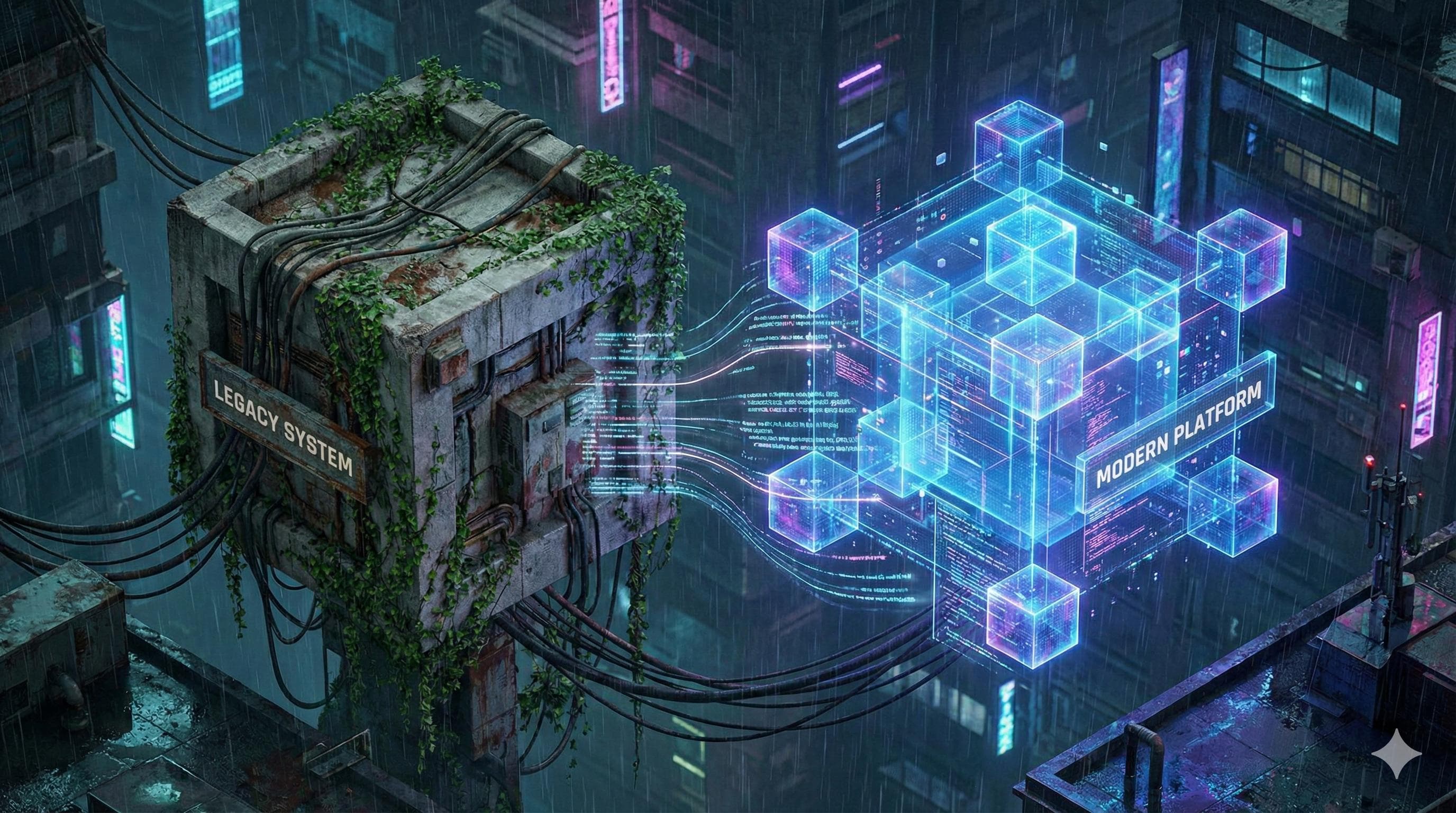
A legacy system does not necessarily mean 20-year-old black-screen DOS programs. Any software written 3 years ago but poorly structured, lacking documentation, and impossible to put a new brick upon is "Legacy."
If you hear the following sentences from your IT team, danger bells are ringing:
- "If we add this feature, the whole system might explode."
- "The friend who wrote that code left the job, nobody knows what it does."
- "We are afraid to restart the servers."
Why Modernization? (Not a Pleasure, But a Necessity)

Insisting on old systems is like entering a Formula 1 race with a flat tire. No matter how powerful your engine is, you cannot take the corner.
Security Vulnerabilities: Old libraries are a playground for hackers. High Maintenance Cost: Keeping a structure that has turned into spaghetti code alive is more expensive than rewriting it from scratch. Talent Loss: Good developers do not want to work with 10-year-old technologies (Legacy Tech). Modernization is also the way to retain talented staff.
The Programevi Approach: Renovating Without Demolishing
Most companies understand modernization as "Throwing everything away and rewriting it from scratch" (Big Bang Rewrite). This is a huge gamble and usually ends in frustration.
As Programevi, we approach this with the meticulousness of a surgeon:
1. Analysis and Strategy (IT Consulting)
First, we put the patient on the table. Which of the existing code is trash, and which is functional? We take an X-ray of the system with our Software Consulting service.
2. From Monolith to Microservices
We divide the massive, clumsy single-piece structure (Monolith) into small, manageable, and independent pieces (Microservices). This way, when the payment system crashes, the product listing page continues to work.

3. Cloud Migration
Get rid of the dusty boxes in your server room. We make your systems scalable with our Cloud Solutions by moving them to AWS, Azure, or Google Cloud infrastructure.
4. Continuity (DevOps)
Modernization is not a one-time job, it is a culture. By integrating DevOps processes, we ensure updates are loaded to the system within seconds and without errors.
Conclusion: Code the Future, Not the Past
While your competitors are talking about artificial intelligence and automation, if you are still struggling with the question, "Why is the server not responding?", the time for change has come.
Saying goodbye to your legacy systems can be frightening. But with the right strategy and the right technology partner, this process can be your company's second spring.
Programevi is ready to move your code to the modern world. Are you?